Trade guides
How to start a concrete business (and get the jobs you want)
Concrete pays well and forgives nothing. Here is how to start a concrete business: experience, equipment, licensing, pricing by the square foot and getting found.
October 13, 20268 min readBy Plamen Bankov, Boomtown Sites
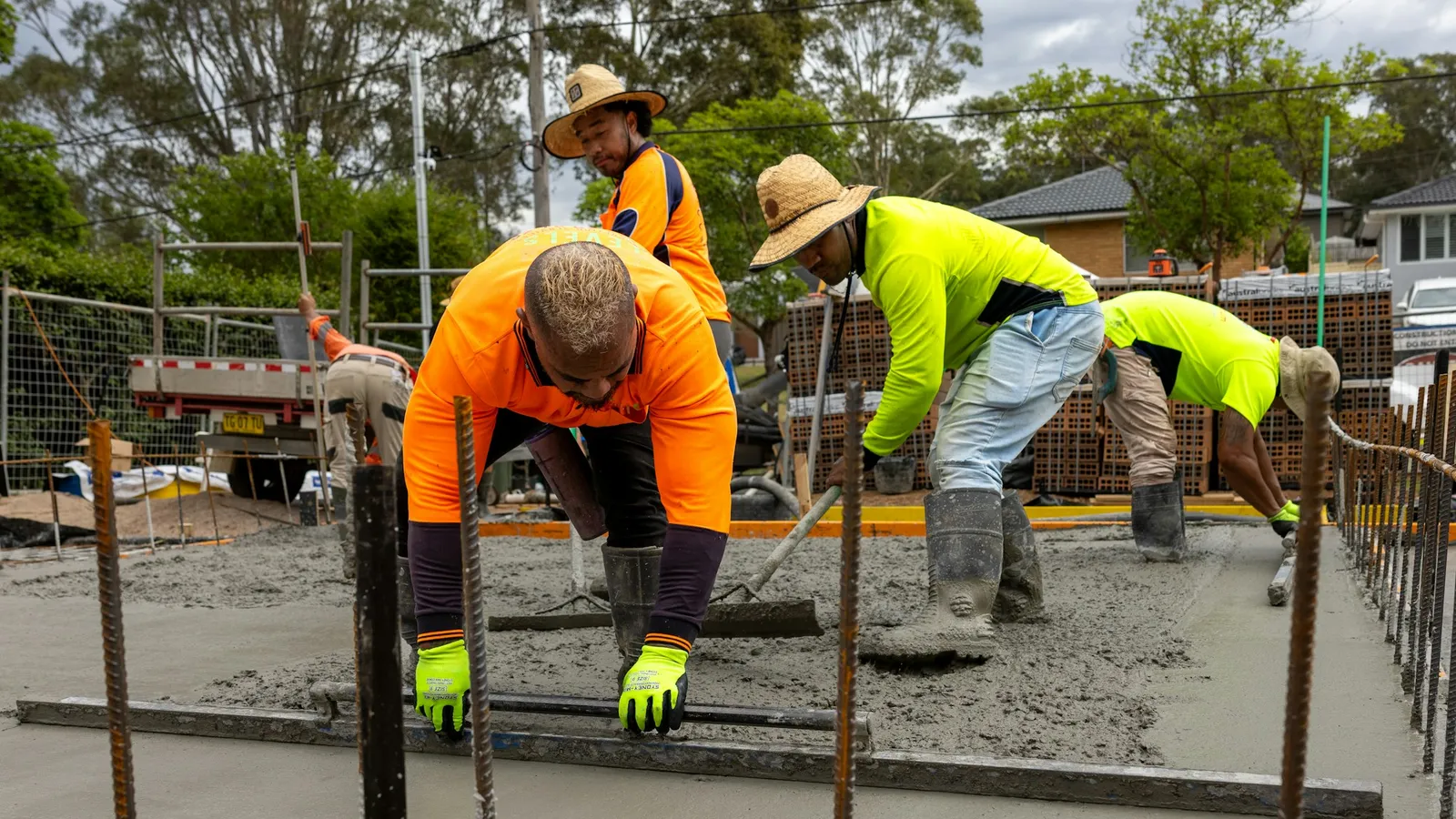
Concrete is hard, physical work with real money in it. Driveways, patios, sidewalks and slabs are needed in every town, and a crew with a good reputation is often booked weeks ahead.
It is also a trade where mistakes are permanent. A bad pour cannot be touched up, and one failed driveway can cost more than the job paid. This guide covers how to start a concrete business carefully, and how to get the kind of jobs you want once you are ready.
1. Get the experience first
Unlike junk removal or pressure washing, concrete is not something to learn on a customer's driveway. Before you go out on your own you should be comfortable with forming, grading and base preparation, placing, screeding, floating, finishing, jointing and curing, in hot and cold weather.
If you are not there yet, a season or two on an established crew is the cheapest training you will ever get.
2. Decide what kind of work you will do
- Residential flatwork: driveways, patios, sidewalks and garage floors. Where most small crews start.
- Decorative concrete: stamped, stained and exposed aggregate. Higher prices, more skill, and work that sells itself in photos.
- Slabs and foundations: shops, garages, additions and pole barns.
- Repair and resurfacing: smaller jobs that fill the gaps in the schedule.
- Commercial work: larger pours, more paperwork and slower payment.
Pick one or two to start. It keeps your equipment list short and your marketing clear.
3. Equipment to start with
You do not need to own everything on day one. Start with the hand tools and rent the rest until the work justifies buying.
- Own: a truck and trailer, forms and stakes, screeds, bull floats, hand floats and trowels, edgers and groovers, wheelbarrows, shovels and rakes, a laser or builder's level and safety gear.
- Rent at first: a plate compactor, a concrete saw, a power trowel and a skid steer for tear-outs.
Most small crews order ready-mix from a local plant instead of mixing on site. Build a good relationship with your supplier early. Their dispatcher can make or break a pour day.
4. Licenses, insurance and permits
Requirements vary by state and city, so check locally before your first paid job. The usual list:
- Business registration, often an LLC, and a local business license.
- A contractor's license, which many states require above a certain job size, sometimes with an exam.
- General liability insurance and commercial auto insurance.
- Workers' compensation once you have employees.
- Bonding, required in some states and for some commercial work.
- Permits for driveway aprons, sidewalks and anything that touches the street or changes drainage.
Always have underground utilities located before you dig. In the US you can request that by calling 811.
5. How to price concrete work
Most flatwork is priced by the square foot, based on thickness, base preparation, reinforcement and finish. To build your number, add up:
- Concrete, ordered by the cubic yard, with a little extra for waste.
- Base material, forms, rebar or mesh and sealer.
- Tear-out and disposal of old concrete.
- Labor for prep day and pour day.
- Equipment rental, fuel and delivery fees.
- Overhead, insurance and your profit.
Put the scope in writing: thickness, strength, finish, joints, what happens with access and weather, and a payment schedule with a deposit. Be honest that concrete can crack. Control joints guide where, they do not prevent it. Customers who hear that before the pour take it far better than those who hear it after.
6. Plan around the weather and the season
Rain, heat and frost all decide when you can pour. In much of the country the season slows or stops in winter, so plan your cash for the slow months and fill them with repairs, sealing or indoor slabs where you can.
7. Get found by homeowners
People planning a driveway or a patio take their time. They search, compare a few contractors and look closely at photos. That means your online presence does the first half of the selling.
Photograph every job
Take a before photo, a photo on pour day and a finished photo from the same spot. Close-ups of stamped and decorative work are worth more than any description. Our guide to before and after photos that win jobs shows what to shoot.
Google Business Profile
This is what puts you on the map when someone searches "concrete contractor near me". Fill in every section and add new job photos often. See how to get your business on Google Maps.
A website with a page per service
Driveways, patios, stamped concrete and slabs are searched for separately, so each deserves its own page with its own photos. Here is how we build websites for concrete contractors, including sites in English and Spanish.
Reviews and referrals
Ask for a review when the forms come off and the customer is happy. Then introduce yourself to home builders, landscapers, pool companies and general contractors, who all need a reliable concrete crew.
8. Common mistakes to avoid
- Underbidding to win work, then losing money on tear-out and disposal.
- Pouring in bad weather to keep a schedule.
- Skimping on base preparation, the cause of most failed slabs.
- No written contract or change order when the customer adds work.
- No photos. Your past jobs are your best sales tool, and they are easy to lose.
Getting started checklist
- Get solid experience on a crew.
- Choose your main type of work.
- Check licensing rules in your state and get insurance.
- Buy hand tools, rent the big equipment.
- Open an account with a ready-mix supplier.
- Set your square foot prices and a written contract.
- Set up your Google Business Profile and website, and photograph every job.
We build websites for concrete contractors from their own job photos. You see a free preview first and only pay if you like it. See our pricing page.
Frequently asked questions
What do I need to start a concrete business?
Solid finishing experience, hand tools and forms, a truck and trailer, a ready-mix supplier, the contractor license your state requires and liability insurance. Larger equipment can be rented at first.
How do concrete contractors price jobs?
Most flatwork is priced by the square foot, based on thickness, base preparation, reinforcement and finish. The price has to cover concrete, materials, tear-out, labor, equipment, overhead and profit.
How do concrete contractors get customers?
Through photos of finished work, a complete Google Business Profile, a website with a page for each service, reviews and referrals from builders, landscapers and pool companies.